
Why Hands Matter More Than Most Photographers Realize
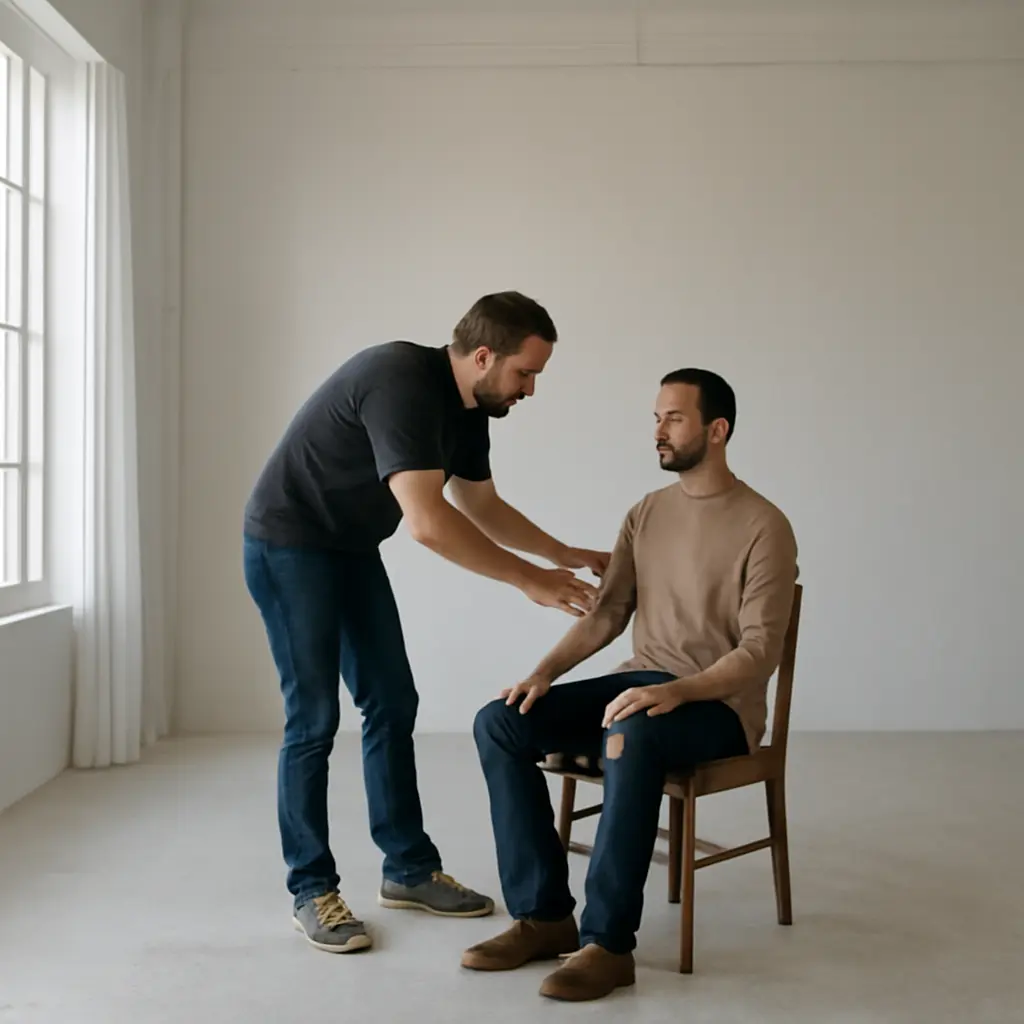
Hands are among photography’s most expressive visual tools: they can reveal character, establish scale, direct attention, and make an image feel tender, tense, or active. Yet they are often treated as incidental details. That oversight matters because viewers readily read body language, and hands can reinforce—or contradict—the emotion in a face. In portraits, documentary work, fashion, and product photography, deliberate hand placement can improve storytelling and composition. There is no universal statistic that measures how much hands affect a photograph’s success, but research on nonverbal communication and established photographic practice explain why they deserve attention.
Hand Expression in Photography: How Gesture Communicates Meaning
Hand expression in photography is the visual meaning viewers infer from a subject’s hands, including their position, movement, contact with objects, and relationship to the rest of the body. Communication researcher David McNeill describes gesture as closely connected with speech and thought; gestures can contribute meaning rather than merely decorate a message. In a still photograph, a hand may similarly act as a visual cue that helps viewers interpret mood, intention, or context.
The meaning is not fixed. A clenched fist may suggest effort, anger, or determination, while an open palm can read as welcome, explanation, or uncertainty. Culture, situation, and the subject’s expression all influence interpretation. Photographers should therefore treat gestures as context-sensitive evidence, not as a universal visual dictionary.
Gesture and Emotional Tone
Gesture is a body movement that conveys or supports meaning. In portraiture, hands can amplify the emotion in a face: relaxed fingers may complement a calm expression, while rigid hands can make an otherwise neutral pose feel tense. If the hands communicate a different mood from the face, that contrast may be intentional, but accidental mismatch can weaken the image.
A practical example is a professional portrait. Hands resting lightly together may suggest composure, whereas hands gripping a chair can suggest strain. These are possibilities, not guaranteed readings. Ask the subject to perform a natural action—adjust a cuff, hold a notebook, or rest a hand on a surface—and observe whether the resulting gesture feels consistent with the intended tone.
Hand Gestures as Story Clues
A story clue is a visible detail that helps explain what is happening beyond the frame. Hands holding a tool, preparing food, turning a page, or comforting another person can identify an activity and relationship without requiring a caption. In documentary photography, the hands of a craftsperson at work may communicate skill and process more directly than a posed portrait alone.
This is especially useful in photographs where the setting is unfamiliar or the subject’s face is not visible. A pair of hands exchanging an object can establish connection; a hand hovering before a door handle can imply hesitation. The detail becomes strongest when it is specific to the scene rather than a generic pose.
Hand Composition in Photography: How Placement Shapes the Frame
Hand composition is the arrangement of hands within the image and their visual relationship to faces, bodies, objects, lines, and empty space. It includes where hands appear, whether they are cropped, how fingers overlap, and where their gestures direct the viewer’s eye. Because hands often contain strong lines and recognizable shapes, even a small placement change can alter balance and emphasis.
This connects gesture’s meaning to the photograph’s structure: a hand may tell a story, but its placement determines how clearly that story is seen. The American Society of Media Photographers’ portrait-practice guidance emphasizes attention to posing and the details of the frame; careful hand positioning is one way photographers make a pose look intentional rather than stiff.
Hand Placement and Visual Direction
Visual direction is the path along which a viewer’s attention moves through an image. A pointing finger, an extended arm, or hands framing an object can guide the eye toward a face or focal point. Conversely, a hand placed near the edge of the frame may lead attention out of the photograph, especially if its gesture points away from the subject.
Photographers can test this by checking the image at thumbnail size. If the hands become the first thing noticed when they are meant to be secondary, adjust their position, brightness, focus, or distance from the face. If they are the story’s main subject, give them enough space and visual clarity to read immediately.
Cropping, Edges, and Tangencies
Cropping determines which parts of the subject remain inside the frame. A crop through a joint or across fingers can look accidental, while a deliberate crop can create intimacy or abstraction. A related compositional problem is a tangency: a near-touch or overlap between shapes that makes their relationship visually ambiguous. Fingers that appear to merge with a shoulder, face, or frame edge can distract from the intended pose.
Before taking the picture, inspect the frame edges and the spaces between fingers. Take a step back or change the camera angle if a hand is crowded against the border. When a close crop is intentional, make it visually decisive rather than leaving a small, awkward fragment.
Hand Context in Photography: How Contact and Objects Build Meaning
Hand context is the meaning created by what hands touch, hold, make, or avoid. The same gesture can be interpreted differently depending on its object and setting: holding a cup in a quiet room differs from gripping a microphone onstage. Context links the hand to a person’s task, identity, or relationship with another subject.
This attribute is particularly important in documentary and commercial images. The hands may show how a product is used, what a worker is making, or how two people relate. In product photography, a hand provides scale and demonstrates interaction; in a documentary scene, it may supply evidence of work or care. The object should support the image’s purpose rather than become a distracting prop.
Hands with Objects
A hand-object interaction is a visible relationship between a person’s hand and an item. It can explain function, establish scale, and make a scene feel lived-in. For example, a hand operating a camera shows use more clearly than a camera placed alone on a table; a hand holding a small product also gives viewers a familiar size reference.
For clarity, keep the object’s important features visible and avoid covering its defining details. Check for distracting reflections, awkward finger overlaps, and shadows that obscure the action. In a real-world craft portrait, focus on the point of contact—such as fingers shaping clay or guiding a tool—because that is where the process becomes legible.
Touch Between People
Interpersonal touch is contact between people that may communicate affection, support, authority, or practical assistance. In photography, a hand on a shoulder or two hands meeting can make a relationship visible, but the image does not establish the full story by itself. The surrounding expressions, setting, and circumstances remain essential to interpretation.
Photographers should also consider consent and comfort. A posed touch that feels unnatural can look performative, while genuine interaction often produces more convincing details. In documentary work, respectful distance and awareness of the people being photographed matter as much as visual technique.
Hand Visibility in Photography: Practical Choices for Better Images
Hand visibility is how clearly a viewer can see and interpret the hands in a photograph. Visibility depends on focus, lighting, contrast, depth of field, pose, and the amount of space around the hands. Not every photograph needs prominent hands, but if they carry important meaning, they should not disappear into shadows, overlap confusingly with clothing, or fall outside the focus plane by accident.
A useful way to assess visibility is to review the image at full size and at a small display size. The first reveals technical issues such as motion blur; the second shows whether the gesture reads quickly. The following checks apply across portrait, editorial, and commercial photography:
- Give fingers room to separate from the body or background when their shape matters.
- Use soft, directional light to reveal form without creating harsh, distracting shadows.
- Check focus on the hands when they are central to the story, especially at a shallow depth of field.
- Review jewelry, sleeves, and props for accidental overlaps or reflections.
- Make several frames while the subject moves naturally, rather than relying on one fixed hand pose.
Pose and Natural Movement
Hand posing is the direction given to a subject about where and how to place the hands. Specific, simple actions are usually easier to perform than abstract instructions such as “look natural.” A photographer might ask someone to hold a lapel, turn a ring, rest a hand on a table, or gently handle a meaningful object, then refine the position in small increments.
Avoid pressing fingers tightly together unless that stiffness is intentional. A light bend in the fingers and a small gap between them can help each hand remain visually distinct. Check both hands: photographers often concentrate on the hand nearest the face and overlook the other hand, which may be hidden, tense, or awkwardly cropped.
Light, Focus, and Detail
Lighting and focus determine whether hand details support the photograph or compete with it. Side lighting can reveal texture and shape, while frontal light may reduce shadows and produce a smoother appearance. A fast shutter speed can help freeze active hands; a slower shutter may be appropriate when motion blur is intended to convey movement.
Technical choices should follow the image’s purpose. For a close-up of a maker’s hands, detail and focus at the point of action may be essential. For a soft environmental portrait, hands may remain secondary, but they should still appear deliberate. There is no single aperture or lighting setup that suits every scene; inspect the result and adjust for the intended visual hierarchy.
Conclusion: Treat Hands as Part of the Story
Hand expression communicates emotion and action; hand composition shapes attention; hand context connects people to objects and one another; and hand visibility determines whether those details can be read. Together, these attributes show why hands matter more than many photographers realize. They are not merely accessories to a face but flexible visual elements that can clarify a story, strengthen a pose, or introduce distracting ambiguity.
Before your next portrait or documentary shoot, review the hands as carefully as the face: ask what they communicate, where they lead the eye, what they touch, and whether the viewer can see them clearly. For further study, explore gesture and nonverbal communication research alongside portrait-pose guidance, then compare how different hand positions change the interpretation of the same scene.
Sources: David McNeill, Hand and Mind: What Gestures Reveal about Thought, University of Chicago Press, 1992, https://press.uchicago.edu/ucp/books/book/chicago/H/bo3684031.html; American Society of Media Photographers, ASMP Guide to New Markets in Photography: Portrait Photography, https://www.asmp.org/strictly-business-blog/portrait-photography/
Related Post

Why Your Photo Stories Feel Flat and How to Build Emotional Impact That Connects
Emotional Impact in Photo Stories: Understanding Why They Feel Flat Photo stories are a powerful [...]
Feeling Lost in Modern Art How Contemporary Photography Makes Sense of Today’s Visual World
Contemporary Photography as a Navigational Tool in Modern Art Contemporary photography, a dynamic and evolving [...]