
What Renaissance Painters Knew About Darkness That We Forgot
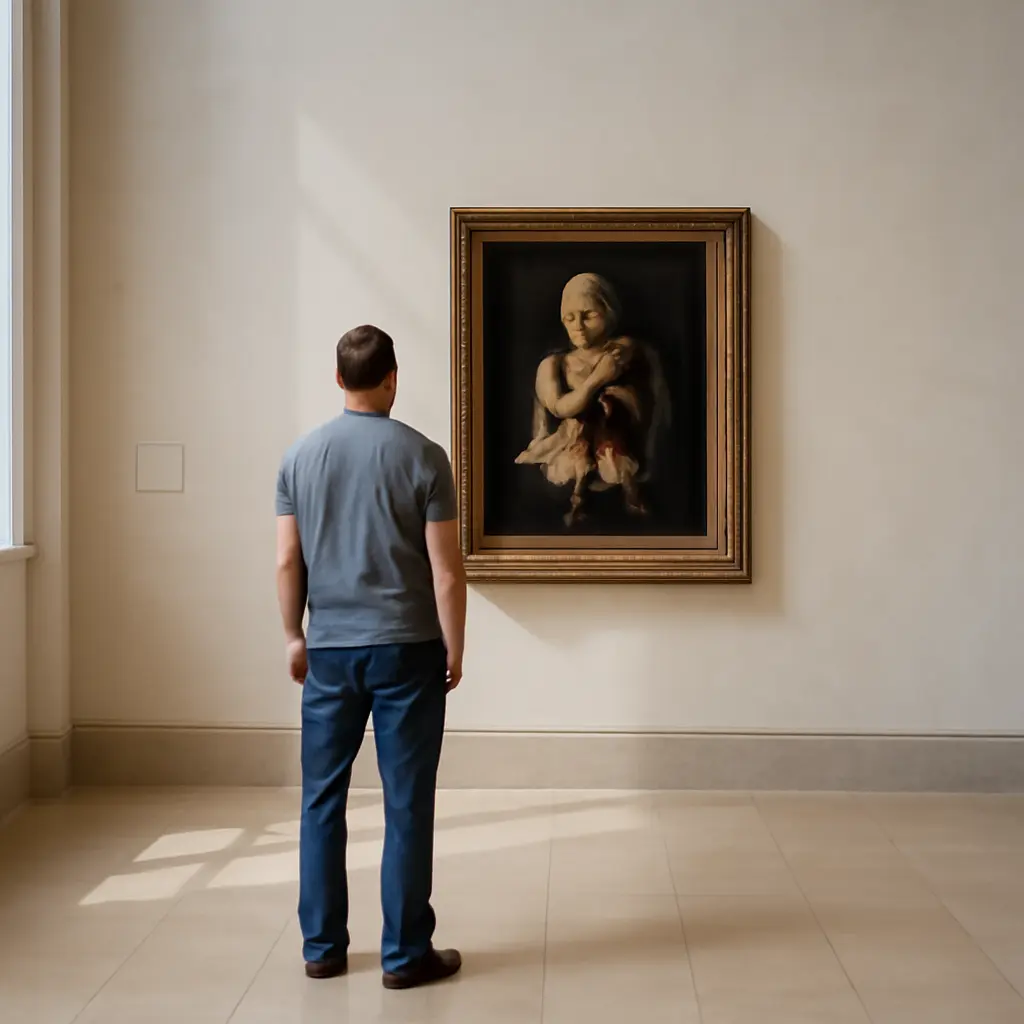
Renaissance painters understood darkness not as an empty absence of light but as a tool for shaping form, directing attention, and conveying emotion. Through chiaroscuro, carefully controlled shadows, and pigments chosen for depth, artists such as Leonardo da Vinci and Caravaggio made darkness active in a picture’s meaning. Their methods depended on close observation and deliberate technique—not simply on painting everything black. Looking at how Renaissance artists modeled forms, organized compositions, and created dramatic effects helps explain both what they knew about darkness and why modern viewers can miss it.
Renaissance painting used darkness to model light
Chiaroscuro is the arrangement of light and shade to make painted forms appear three-dimensional and to give a composition visual structure. The term combines the Italian words for “light” and “dark.” The National Gallery of Art describes chiaroscuro as a method of modeling forms through gradations of light and dark. Renaissance artists used it alongside linear perspective, anatomy, and color to make figures appear to occupy a coherent space.
Darkness in this context was relational: a shadow looked dark because it was set against a lit surface, and the strength of that contrast could suggest a nearby candle, a window, or an unseen source beyond the frame. A shadow could round a cheek, separate an arm from a torso, or lead the eye toward a face. This is why “darkness” in Renaissance painting includes several related methods—tonal modeling, cast shadows, atmospheric depth, and dramatic illumination—rather than one uniform black effect.
Sfumato: darkness softened into atmosphere
Sfumato is a gradual, smoky blending of tones without a sharply defined outline. Leonardo da Vinci described the effect in his writings on painting, and his practice can be seen in works such as the Mona Lisa. Subtle transitions around the sitter’s face and the hazy landscape behind her make edges feel softened by air rather than cut out against a background.
Sfumato differs from a hard-edged shadow: it makes forms seem to emerge gradually from dimness. Conservation and technical studies of Leonardo’s paintings have identified extremely thin, layered applications that help produce delicate transitions. The method shows that Renaissance darkness could be built through restraint and minute changes in tone, not only through dramatic black areas.
Cast shadows and tonal modeling
Tonal modeling describes the shifts from lit planes to half-tone and shadow that make a body appear solid. A cast shadow, by contrast, is the shape one object throws onto another surface. Renaissance artists observed both: modeling gave a figure volume, while cast shadows helped anchor it to a floor, wall, or landscape.
These distinctions mattered in pictures designed to persuade viewers that sacred or historical scenes occupied believable space. In Masaccio’s The Tribute Money, for example, the figures’ modeling and cast shadows contribute to the sense of bodies standing under a consistent light. The painting is an early landmark of Renaissance naturalism, demonstrating how shadow could support spatial credibility as well as visual drama.
Renaissance painters used darkness to direct attention
Once shadow could make a body seem solid, painters could use it to organize what viewers noticed first. A dark background can isolate a face; a shaft of light can turn a hand or gesture into the focal point; and a shadowed edge can keep secondary details from competing. Darkness was therefore compositional, not merely descriptive.
This approach connects Renaissance naturalism with later Baroque tenebrism, a particularly forceful use of deep shadow and concentrated illumination. The terms overlap in practice but are not interchangeable: chiaroscuro broadly describes light-and-dark modeling, while tenebrism generally refers to more extreme contrasts in which large areas remain dark. Caravaggio, active in the late sixteenth and early seventeenth centuries, became a leading practitioner of this more theatrical approach.
Compositional shadow
Compositional shadow is darkness arranged to guide the viewer through an image. In Leonardo’s The Last Supper, perspective lines converge near Christ, while contrasts of light and shade help distinguish the central figure and organize groups of apostles. The room’s architecture and the placement of figures reinforce the direction of attention.
The example also shows why darkness cannot be understood in isolation from the whole picture. A shadow’s function depends on what it conceals, what it separates, and where the brighter passages lead. In a successful composition, dim areas can create pauses and visual boundaries as effectively as illuminated areas create emphasis.
Tenebrism: darkness made dramatic
Tenebrism intensifies chiaroscuro by placing strongly lit figures against extensive darkness. Caravaggio’s paintings, including The Calling of Saint Matthew in Rome’s Contarelli Chapel, use a beam-like light to make a moment of recognition feel immediate. The darkness obscures much of the setting, while the illuminated faces and gestures carry the narrative.
Caravaggio’s method helped shape Baroque painting across Europe, but it built on earlier artists’ investigations of volume, light, and shadow. The distinction is useful: Renaissance painters often used graduated shading to clarify form and space, whereas tenebrist painters could make the contrast itself the dominant event. In both cases, darkness remains legible because it is structured by light.
Pigments and painting surfaces shaped Renaissance darkness
A painted shadow is not simply a dark color applied once. Its appearance depends on pigments, binders, underlayers, varnish, surface texture, and the way light reflects from the finished work. Renaissance painters worked in media including tempera and oil, each with different handling properties. Oil paint’s slower drying time made it especially useful for blending and layering, though artists adapted their methods to the materials and commissions available.
The Metropolitan Museum of Art’s essays on Renaissance painting describe how artists used layered paint and glazing to build color and luminosity. A glaze is a thin, relatively transparent layer placed over an underlying paint layer; it can deepen a tone without hiding the color beneath. Such methods help explain why historical shadows may have possessed more depth and subtle color than a flat, opaque black suggests.
Layering, glazes, and dark color
Layering allowed painters to adjust a passage gradually. A dark underpainting could establish the shadow, while translucent or semi-transparent layers modified its hue and depth. Shadows might contain browns, reds, greens, or blues, depending on the pigments and the surrounding light; they were not necessarily neutral black.
This material complexity is one reason paintings can look different today from how their makers intended. Pigments may fade or change chemically, varnish can yellow, and later restoration can alter contrast. The National Gallery in London and other conservation institutions use technical imaging and pigment analysis to study such changes, helping distinguish an artist’s original decisions from the effects of age and treatment.
Why old paintings can appear darker now
A painting’s present appearance is not a perfect record of its first display. Natural aging, smoke, dust, unstable pigments, past cleaning, and discolored varnish can change the balance between light and dark. Some pigments become less vivid; some varnishes grow yellow or brown, warming and dimming the surface.
Conservation is therefore an evidence-based process rather than a simple attempt to make an artwork look new. Conservators examine the surface, study paint samples where appropriate, and use tools such as infrared reflectography and X-radiography to understand the layers beneath visible paint. These methods can reveal underdrawings, revisions, and material changes, but they do not provide a single definitive reconstruction of the original viewing experience.
Modern viewing habits can obscure Renaissance darkness
Renaissance painters’ understanding of darkness is easy to overlook when images are encountered as small reproductions on bright screens. A screen emits light, compresses tonal differences, and may alter color according to its settings. A museum painting is reflective: its appearance depends on the gallery’s illumination, the viewer’s position, and the condition of its surface.
Photography introduces further differences. Exposure choices can flatten shadows or turn them into featureless black; digital processing can increase contrast or saturation; and reproduction sizes can make subtle transitions difficult to see. These practical limits do not mean that every reproduction is misleading, but they do make close looking and reliable museum documentation especially valuable.
Viewing conditions and visual adaptation
Human vision adapts to surrounding light. In a dim gallery, viewers gradually become more sensitive to low illumination, while a bright phone screen can temporarily make nearby dark details harder to perceive. The National Eye Institute explains that rods are more sensitive in low light and cones support color vision in brighter conditions. This basic visual science helps explain why the same dark passage can appear different under changing conditions.
To examine a painting’s shadows, viewers can give their eyes time to adjust, look for reflected light within the dark passages, and compare the shadow’s color with nearby illuminated areas. Museum labels and conservation essays can also clarify whether a work has undergone restoration or has known material changes.
A practical way to read darkness in a painting
A useful close-looking exercise is to ask three questions: Where does the brightest light fall? What forms emerge from the surrounding dark? And what does the darkness conceal or connect? This method shifts attention from identifying a “dark style” to understanding how the artist built the image.
For example, compare Leonardo’s softly blended shadows in the Mona Lisa with the concentrated illumination in Caravaggio’s The Calling of Saint Matthew. The first uses subtle transitions to make forms feel atmospheric; the second uses stark contrast to make a narrative moment unmistakable. Both demonstrate that darkness can describe, organize, and communicate.
Conclusion: Renaissance darkness was a deliberate visual language
Renaissance painters treated darkness as an active part of painting: chiaroscuro modeled volume, sfumato softened edges, cast shadows anchored figures, and later tenebrism turned contrast into drama. Layered pigments and glazes gave shadows material depth, while changing surfaces and modern viewing conditions can make historical paintings seem darker or flatter than intended.
The broader lesson is that darkness is not merely the opposite of light. It can create space, focus attention, suggest atmosphere, and carry emotion. To see these choices more clearly, compare works in person where possible and consult museum conservation resources alongside reproductions. Careful looking reveals how much Renaissance painters communicated through what they chose not to illuminate.
Sources: National Gallery of Art, “Chiaroscuro,” https://www.nga.gov/learn/teachers/lessons-activities/elements-art/chiaroscuro.html; Encyclopaedia Britannica, “Sfumato,” https://www.britannica.com/art/sfumato; The Metropolitan Museum of Art, “Leonardo da Vinci (1452–1519),” https://www.metmuseum.org/toah/hd/leon/hd_leon.htm; Smarthistory, “Masaccio, The Tribute Money,” https://smarthistory.org/masaccio-the-tribute-money/; Musei Vaticani, “The Last Supper,” https://www.museivaticani.va/content/museivaticani/en/collezioni/musei/cappella-sistina/ultimo-restauro/ultima-cena.html; The National Gallery, “Caravaggio: The Calling of Saint Matthew,” https://www.nationalgallery.org.uk/paintings/caravaggio-the-calling-of-saint-matthew; The Metropolitan Museum of Art, “The Materials and Techniques of Renaissance Painting,” https://www.metmuseum.org/essays/the-materials-and-techniques-of-renaissance-painting; National Gallery, “Conservation,” https://www.nationalgallery.org.uk/conservation; National Eye Institute, “The Human Eye and How It Works,” https://www.nei.nih.gov/learn-about-eye-health/healthy-vision/how-eyes-work.
Related Post

Women in Contemporary Art Explained A Beginner Guide to Key Voices and Movements
Defining Women in Contemporary Art: Key Voices and Movements Women in contemporary art refer to [...]
Struggling With Final Pieces How Sketching and Planning in Art Improves Your Results
Sketching and Planning in Art: Foundations for Enhanced Final Outcomes Sketching and planning are fundamental [...]