
Looking inward the obsession with corporeal vulnerability reshaping visual art
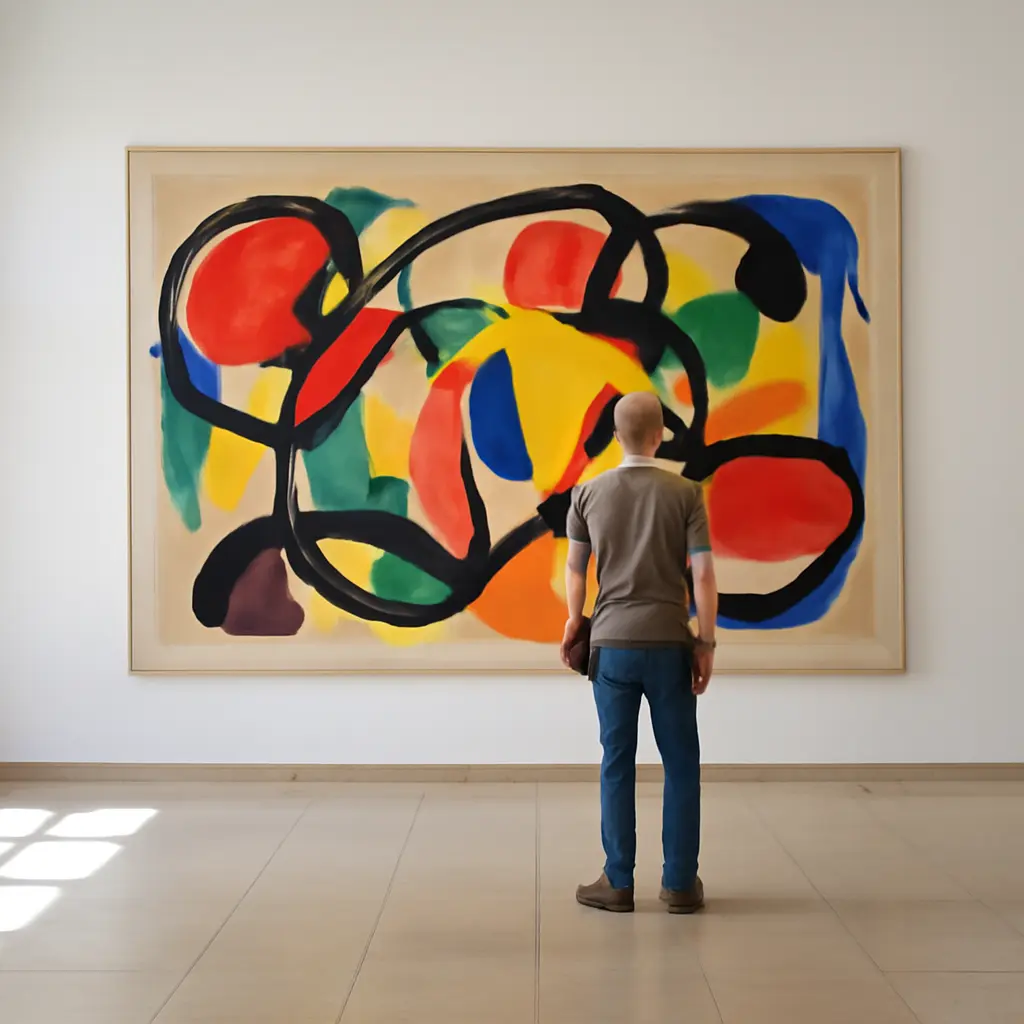
Looking inward, contemporary artists increasingly treat the vulnerable body not merely as a subject to depict but as a site where identity, illness, gender, race, trauma, and power become visible. This turn toward corporeal vulnerability draws on performance art, feminist practice, disability art, and medical imagery; it is shaped by a long history of representing the body and by present-day realities such as chronic illness and unequal access to care. The National Endowment for the Arts’ 2022 report on arts participation found that 52.2% of U.S. adults attended an art exhibit or visited an arts venue in person during 2022, demonstrating the broad public setting in which these visual questions circulate. Looking inward matters because such work can challenge idealized images of health and beauty, make private experience public, and ask who has the authority to represent a body.
Visual art reframes corporeal vulnerability as a subject
Corporeal vulnerability is the condition of being physically exposed to injury, illness, dependency, aging, pain, or loss of control. In visual art, it describes both what an artwork represents and the risks involved in making or encountering it: the artist may expose personal experience, while viewers confront bodies that conventional images often conceal or idealize. Art historian Amelia Jones, in Body Art/Performing the Subject (1998), argues that body art makes the body’s relationship to identity and spectatorship central to meaning. The term therefore reaches beyond images of suffering; it includes the ways bodies are watched, classified, cared for, disciplined, and made legible.
The relevant forms include performance and body art, self-portraiture, feminist and queer art, disability-centered practice, illness narratives, and works using medical or biological materials. They differ in medium and intention, but share a question: what changes when the body is understood as finite and socially situated rather than as a neutral, controllable object? The distinction is important. Vulnerability can communicate agency and solidarity, but it can also be sensationalized or reduced to spectacle.
From idealized body to situated body
The idealized body in much classical and academic art is presented as balanced, coherent, and seemingly outside ordinary time. By contrast, a situated body bears marks of lived experience: age, disability, fatigue, racialization, gender, work, or medical intervention. Feminist art historian Griselda Pollock’s writing on representation emphasizes that images are produced within social and historical relations, not outside them. This perspective helps explain why a scar, pose, or bodily absence can carry meaning beyond anatomy: it may register norms about beauty, productivity, sexuality, or whose pain is believed.
A field shaped by historical shifts
The turn toward bodily presence gained force in the 1960s and 1970s, when performance and conceptual artists challenged the separation between art object and lived action. Artists such as Carolee Schneemann and Ana Mendieta used the body to contest gendered conventions and to connect physical experience with social and cultural histories. Later, artists including Hannah Wilke and Jo Spence addressed illness, aging, and the camera’s power to frame the body. These practices did not simply replace idealized representation; they expanded the question of who can appear, under what conditions, and with what consequences.
Performance makes corporeal vulnerability immediate
Performance-based body art uses the artist’s or participant’s living body as material, making duration, physical limits, and the viewer’s presence part of the work. The body’s vulnerability is not only depicted: it can be enacted through stillness, endurance, exposure, touch, or risk. This approach can unsettle the distance associated with a conventional picture, but it also raises ethical questions about consent, documentation, and the audience’s responsibility.
Endurance, exposure, and audience responsibility
Marina Abramović’s Rhythm 0 (1974) placed objects, including items capable of causing harm, before an audience and invited visitors to use them on her body. The work’s six-hour structure exposed how quickly spectatorship could become participation and how responsibility shifts when a person is treated as an available object. It is a notable case study in vulnerability as a social relation, rather than simply a physical state. The work also cautions against treating risk as proof of artistic seriousness: ethical interpretation must attend to the performer’s agency, the conditions of the event, and how later documentation frames it.
The body as evidence, not spectacle
Performance can make bodily experience legible without reducing it to a dramatic image of pain. In works grounded in feminist or queer experience, gesture and presence may contest the assumption that bodies exist for others’ inspection. Jones’s account of body art is useful here: the viewer does not encounter an unmediated body but a body interpreted through cultural expectations and the circumstances of display. A responsible reading therefore asks who controls the image, whether the artist’s consent is visible, and whether viewers are invited to witness, judge, or intervene.
This emphasis on spectatorship leads naturally to self-portraiture and photography, where vulnerability is mediated through framing, pose, and circulation rather than live encounter.
Self-portraiture and photography make private experience public
Self-portraiture turns looking inward into a visual method: artists use their own image to examine identity, bodily change, and the gap between personal experience and public representation. Photography can make this inquiry especially direct, yet it is never a transparent record. Cropping, lighting, sequencing, captions, and exhibition context shape what the image appears to prove. The medium can therefore expose vulnerability while also giving the artist control over how it is seen.
Illness, aging, and the changing self-image
Jo Spence’s photographic work on illness and treatment challenged the polished conventions of portraiture and medical documentation. By making her own changing body visible, Spence questioned who gets to narrate illness: the patient, the clinician, the photographer, or the institution. Hannah Wilke’s late work, including Intra-Venus, similarly confronts viewers with the effects of illness and treatment, resisting the erasure of a body that no longer conforms to conventional ideals of beauty. Such work can invite recognition and empathy, but it also demands care: the image should not turn a person’s suffering into a consumable spectacle.
Visibility, consent, and the circulation of images
A photograph may travel far beyond the setting in which it was made. Online circulation can expand access to marginalized experiences, but it can also detach images from artists’ intentions and expose subjects to unwanted scrutiny. The ethical stakes are particularly high when an image involves medical information, disability, or trauma. Museums and publishers can support responsible interpretation by providing context, respecting artists’ stated boundaries, and avoiding captions that define a person solely by diagnosis or injury.
When artists turn from individual self-representation to broader social structures, corporeal vulnerability becomes a way to examine disability, race, gender, and the unequal distribution of care.
Disability and social identity reshape representations of the body
Disability art and socially engaged visual practice challenge the idea that bodily difference is an individual defect to be corrected. They often foreground access, interdependence, and the environments that make some bodies welcome while excluding others. This approach connects artistic representation with disability studies, which distinguishes bodily impairment from the social barriers that restrict participation. The result is a shift from asking how a body fails to asking how institutions, design, and cultural expectations produce exclusion.
Disability art and the politics of access
Disability-centered artists may use mobility aids, adaptive technologies, or experiences of chronic illness as part of their visual language, not as symbols of tragedy. Their work can expose the gap between a museum’s claims of universal access and the practical realities of stairs, seating, sensory environments, and interpretation. The World Health Organization’s Global Report on Health Equity for Persons with Disabilities (2022) estimates that 1.3 billion people—about 16% of the global population—experience significant disability. That scale underscores why disability representation is not a marginal concern. It also cautions against treating disabled people as a single visual or cultural category.
Intersectionality and unequal bodily risk
Intersectional approaches examine how race, gender, class, sexuality, and disability shape the risks a body faces and the meanings assigned to it. Artist and writer Adrian Piper’s conceptual practice, for example, has used identity and public encounter to question how social assumptions become attached to bodies. The point is not that one image can represent an entire community, but that representation is never evenly distributed: some bodies are hypervisible, while others are ignored or misread. This makes authorship, context, and the diversity of artists in collections essential to interpretation.
Museums, care, and institutional responsibility
Institutions shape how vulnerable bodies are encountered through acquisition, display, conservation, and visitor access. Curators can avoid presenting pain as a detached spectacle by explaining the work’s historical context, the artist’s intentions where known, and the limits of what a viewer can infer. Accessibility practices—including clear sightlines, seating, captioning, and alternative formats—also determine who can participate in looking. In this sense, care is not only a theme represented in art; it is a practical responsibility of the institution presenting it.
Medical imagery turns inwardness into a question of power
Medical imagery includes scans, anatomical diagrams, clinical photographs, and biological materials used in art. These forms promise a view beneath the surface, but they also carry the authority of diagnosis and scientific classification. Artists who work with them can reveal how medicine helps people understand their bodies while asking who controls bodily data, whose experience counts as evidence, and how a clinical image changes when it enters a gallery.
The diagnostic gaze and visual authority
A scan or clinical photograph may appear objective because it is produced through technical instruments, yet its meaning depends on interpretation. Medical historian Ludmilla Jordanova’s work on visual culture and science shows how images participate in systems of knowledge rather than simply reflecting facts. In art, recontextualizing such images can expose the difference between seeing an organ and understanding a person’s experience of illness. The key question is not whether medical imagery is truthful, but what kind of truth it can provide and what it leaves outside the frame.
Biological materials and ethical boundaries
Some artists use blood, tissue, or other biological material to collapse the distance between representation and physical substance. Such work can make mortality and dependency difficult to ignore, but it also raises questions of consent, safety, privacy, and the handling of human material. Viewers and institutions should distinguish an artist’s deliberate choice from the coercive use of another person’s body or medical information. Ethical transparency about sourcing and permissions is part of the work’s meaning, not an administrative afterthought.
Medical imagery thus extends the inward turn beyond self-portraiture: it makes the body visible through instruments and institutions, linking private vulnerability to public systems of care and knowledge.
Conclusion: vulnerability changes what visual art can ask
Corporeal vulnerability has reshaped visual art by moving attention from the idealized body to the situated, finite, and socially interpreted body. Performance makes exposure and spectatorship immediate; self-portraiture and photography turn private experience into a negotiated public image; disability-centered and intersectional practices reveal how access and social power shape bodily life; and medical imagery questions the authority of looking beneath the skin. Together, these approaches show that vulnerability is neither weakness nor a visual effect by itself. It is a condition through which artists examine agency, care, identity, and unequal power.
For readers, artists, and cultural institutions, the next step is to look attentively and ethically: seek out artists whose work has been excluded from dominant collections, consider the conditions under which bodily images are made and circulated, and support accessible exhibitions with meaningful context. Further reading in body art, feminist art history, disability studies, and medical humanities can deepen that inquiry and clarify how looking inward also changes the way society looks at others.
Sources: National Endowment for the Arts, Arts Participation Patterns in 2022: Highlights from the Survey of Public Participation in the Arts, https://www.arts.gov/impact/research/publications/arts-participation-patterns-2022-highlights-survey-public-participation-arts; Amelia Jones, Body Art/Performing the Subject, University of Minnesota Press, 1998, https://www.upress.umn.edu/9780816627646/body-art-performing-the-subject/; Griselda Pollock, Vision and Difference: Feminism, Femininity and the Histories of Art, Routledge, 1988, https://www.routledge.com/Vision-and-Difference-Feminism-Femininity-and-the-Histories-of-Art/Pollock/p/book/9780415053880; Marina Abramović, Rhythm 0, 1974, performance documentation, https://www.marinaabramovic.com/; World Health Organization, Global Report on Health Equity for Persons with Disabilities, 2022, https://www.who.int/publications/i/item/9789240063600; Tate, Jo Spence: Biography and Collection, https://www.tate.org.uk/art/artists/jo-spence-1999; Whitney Museum of American Art, Hannah Wilke: Intra-Venus, https://whitney.org/collection/works/; Ludmilla Jordanova, Sexual Visions: Images of Gender in Science and Medicine between the Eighteenth and Twentieth Centuries, University of Wisconsin Press, 1989, https://uwpress.wisc.edu/books/0288.htm.
Related Post

The Untold Stories Behind Landscape in Visual Art That Most Viewers Miss
Interpretation Layers in Landscape Visual Art Landscape visual art, defined broadly as artistic representations of [...]
What Renaissance Painters Knew About Darkness That We Forgot
Renaissance painters understood darkness not as an empty absence of light but as a tool [...]