
Women In Art History Reclaiming Visibility Through Curatorial Revisionist Practices
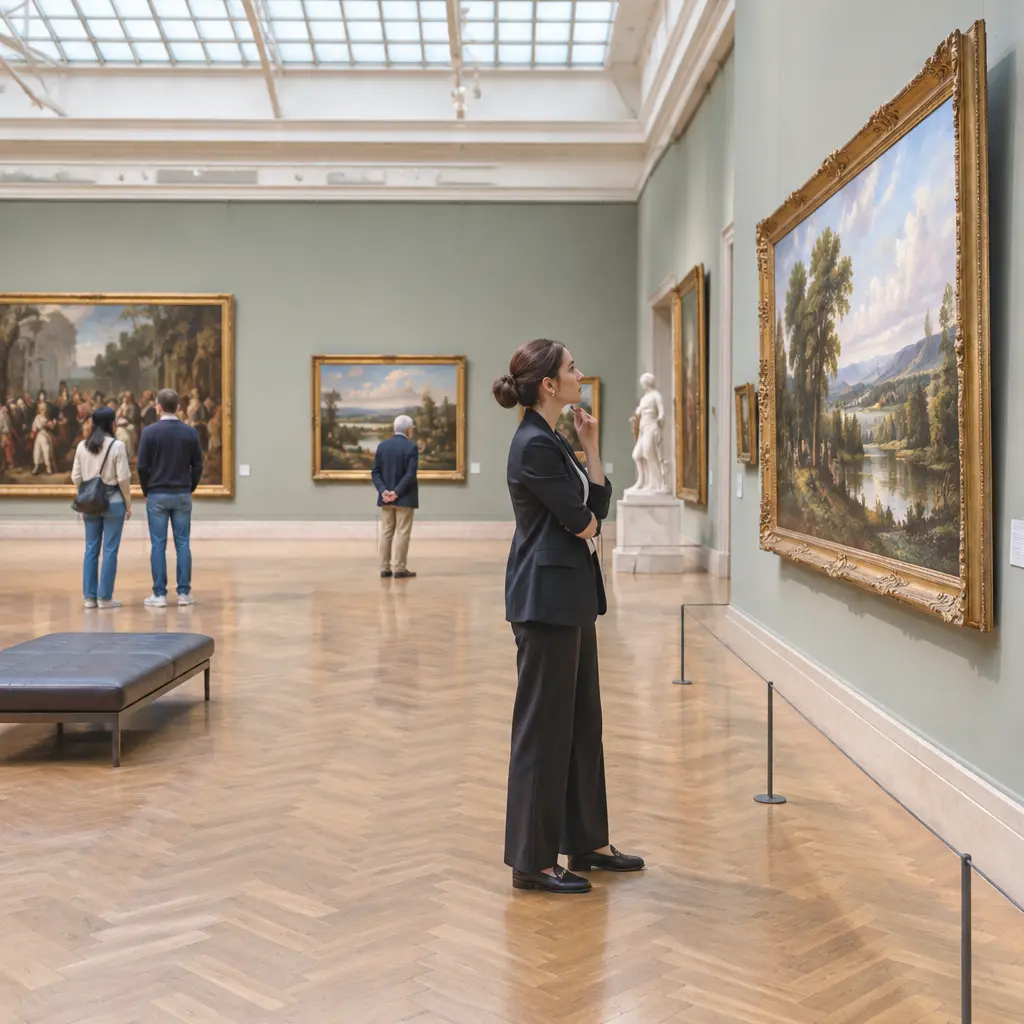
Women’s visibility in art history is being reclaimed through curatorial revisionism: the deliberate re-examination of collections, labels, exhibitions, and institutional narratives that have overlooked or misrepresented women artists. Museums and scholars are recovering works, revising attributions, and presenting new interpretations of familiar objects. The need is measurable: a 2019 National Museum of Women in the Arts analysis found that women made up just 11% of artists represented in major U.S. museum collections, while
[Actually incomplete sentence? Need correct.] Women’s visibility in art history is being reclaimed through curatorial revisionism: the deliberate re-examination of collections, labels, exhibitions, and institutional narratives that have overlooked or misrepresented women artists. Museums and scholars are recovering works, revising attributions, and presenting new interpretations of familiar objects. The need is measurable: a 2019 National Museum of Women in the Arts analysis of 18 major U.S. museums found that 11% of artists represented in their collections were women. This article defines revisionist curating, traces its methods—from attribution research and collection audits to interpretive reframing—and considers examples, limitations, and ways audiences can support more inclusive histories.
Revisionist Curating and Women’s Visibility in Art History
Curatorial revisionism is a critical method of revisiting how art is selected, attributed, displayed, and explained. It does not simply add overlooked artists to an existing timeline; it asks how institutions and art historians produced that timeline, whose work was preserved, and what assumptions shaped judgments of artistic importance. Art historian Linda Nochlin’s 1971 essay, “Why Have There Been No Great Women Artists?,” redirected the question from women’s supposed lack of ability to the educational, professional, and institutional barriers that restricted their opportunities.
The practice includes several related approaches: recovering artists omitted from standard histories; checking attributions and provenance; auditing collections and acquisitions; redesigning displays; and interpreting artworks through gender, labor, class, race, and colonial history. These methods matter because representation in galleries affects what audiences understand as culturally significant, while museum catalogs and exhibitions influence scholarship, the art market, and future collecting.
Collection audits and acquisition policies
A collection audit measures who is represented across an institution’s holdings, exhibitions, and acquisitions. It can reveal gaps by gender as well as by race, geography, medium, and period. The National Museum of Women in the Arts’ 2019 research examined 18 major U.S. museums and reported that women accounted for 11% of artists represented in their collections. That figure is a snapshot of selected institutions, not a universal measure of every museum, but it demonstrates how longstanding collecting choices shape public visibility.
Audits can lead to revised purchasing priorities, targeted research, loans, and collection displays. Their value depends on transparency: institutions should explain how they count artists, handle collaborative works, and distinguish collection holdings from works currently on view. A higher percentage alone does not establish that interpretation or institutional power has changed.
Attribution, provenance, and rediscovered work
Attribution research investigates who made an artwork, using evidence such as signatures, archival records, stylistic comparison, technical examination, and provenance—the documented history of an object’s ownership. Women’s works have sometimes been credited to male relatives, workshop leaders, or anonymous makers, while their contributions to collaborative production have been obscured. Revising an attribution can therefore alter not only a label but also an artist’s place in scholarship and the history of a period.
The process requires caution. New attributions may remain contested, and uncertain evidence should be described as such rather than presented as settled fact. Museums can make the research visible by explaining what evidence supports a change and by recording earlier catalog histories.
Exhibitions and Interpretive Revision
Once research identifies neglected artists or narratives, curators translate that knowledge into exhibitions and interpretation. Revisionist exhibitions may center women artists, place their work alongside better-known peers, or reorganize galleries around themes that challenge conventional divisions between “major” and “minor” art. Their purpose is not merely to supply missing names; it is to help visitors see how artistic value and historical significance were constructed.
Reframing familiar works and narratives
Reframing changes the questions an exhibition asks. A display might connect portraiture to women’s access to public life, examine the gendered division between fine and decorative arts, or treat domestic labor as a subject with economic and political meaning. Labels can identify constraints on education, travel, patronage, and professional recognition without reducing an artist’s work to biography alone.
This approach also challenges the assumption that women artists form a separate, uniform category. Women’s experiences differ across race, class, sexuality, nationality, and historical period. Intersectional interpretation therefore asks which women are being recovered, which remain absent, and how institutions can avoid replacing one narrow canon with another.
Case study: the Guerrilla Girls and museum accountability
The Guerrilla Girls, an anonymous feminist artist collective founded in 1985, use posters, public interventions, and statistical critique to expose gender and racial inequities in the art world. Their 1989 Metropolitan Museum of Art poster famously asked whether women had to be naked to enter the museum, contrasting the small share of women artists in the modern-art galleries with the prevalence of female nudes. The poster’s figures described the museum’s display at that time, not a current audit, but its blunt comparison made institutional representation a public question.
The example shows how revisionist practice can extend beyond exhibition design. Activism can pressure museums to disclose data, revisit collection policies, and explain whose work appears on their walls. It also illustrates why figures need dates and clear definitions: representation changes over time, and a statistic without context can mislead.
Limits, Responsibilities, and Public Participation
Curatorial revisionism can change what visitors encounter, but a temporary exhibition does not automatically transform a museum’s permanent collection, staffing, budgets, or governance. Institutions should pair programming with sustained research, acquisition, conservation, and transparent reporting. They should also consult artists, scholars, communities, and descendants where appropriate, particularly when addressing contested ownership or histories shaped by colonialism.
Visitors can contribute by asking who is represented in galleries and catalogs, attending exhibitions focused on underrecognized artists, consulting museum research, and supporting institutions that publish collection data and acquisition policies. Educators and researchers can compare multiple sources, distinguish established facts from disputed interpretations, and include women artists in broader histories rather than confining them to occasional thematic displays.
Conclusion: Making Visibility Last
Curatorial revisionism reclaims women’s visibility through collection audits, attribution and provenance research, acquisition changes, exhibition design, and new interpretive frameworks. The collection figures documented by the National Museum of Women in the Arts and the activism of the Guerrilla Girls show both the scale of historic exclusion and the importance of public accountability. Lasting change requires more than inserting overlooked artists into existing narratives: it means examining how those narratives were made and sustaining institutional practices that broaden them. Readers can begin by exploring women’s art, questioning museum representation, and calling for transparent, ongoing research.
Sources: National Museum of Women in the Arts, “Where Are the Women?,” 2019, https://nmwa.org/wp-content/uploads/2020/03/Where_are_the_Women_2019_Report.pdf; Linda Nochlin, “Why Have There Been No Great Women Artists?,” ARTnews, 1971, https://www.artnews.com/art-news/retrospective/why-have-there-been-no-great-women-artists-4201/; Guerrilla Girls, “Do Women Have to Be Naked to Get into the Met. Museum?,” 1989, https://www.guerrillagirls.com/naked-through-the-ages
Related Post
Landscape in Visual Art Shaped by Politics, Memory, and Ownership of Land
Landscape in visual art is not simply a picture of scenery: it is a way [...]
Sensory Experience in Art Explained for Beginners Who Want to Feel More Than See
Sensory Experience in Art: Definition and Importance for Deeper Engagement The sensory experience in art [...]